
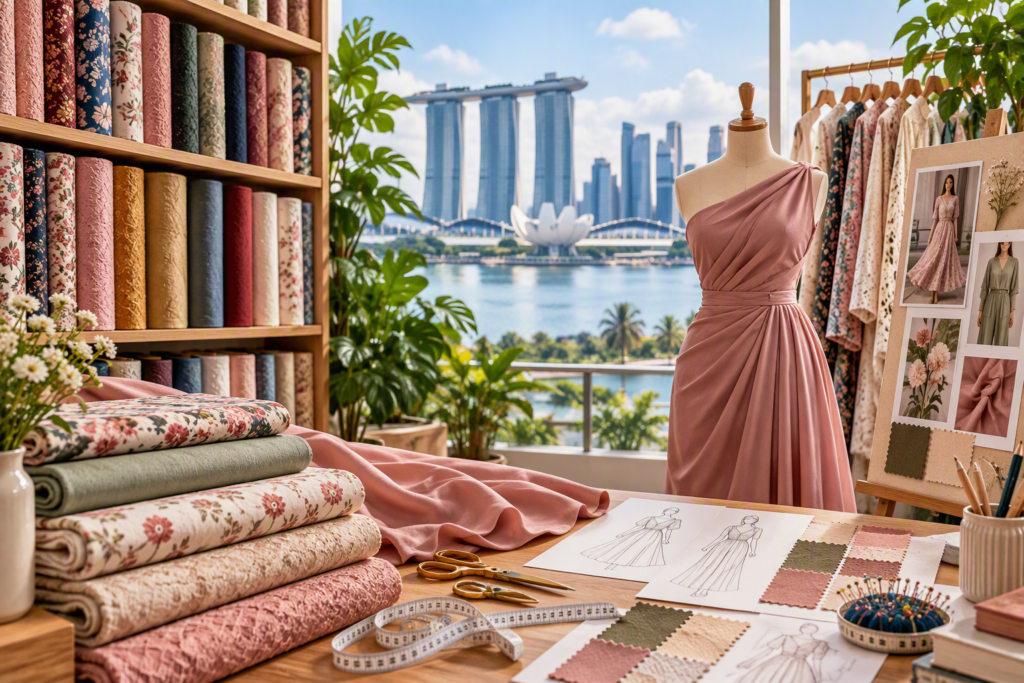
Recreating a trending fashion look starts with choosing fabric that can reproduce the shape, movement, texture and overall character of the original design. Most fashion lovers know why fabric selection matters as two garments made from the same pattern can look completely different when different textiles are used.
For fashion projects, fabric influences how a garment fits, moves and holds its shape. For event decor, it can transform a plain venue into a more immersive space through draping, textured backdrops and layered installations. This makes fabric selection important for a wide range of buyers, from designers and DIY enthusiasts to wedding planners and event decorators.
Singapore’s creative landscape is influenced by both international and local trends. The best way to find the right fabric is to visit a fabric shop in Singapore. Shoppers can gain access to materials that make it possible to design runway pieces, social media outfits, or even seasonal fashion trends.
Fabric suppliers serve as more than a source of materials. They help compare how different textiles feel, fall and respond to movement before deciding whether they are suitable for a particular fashion concept.
Why Fabric Matters When Recreating Trending Looks
Fabric determines much of a finished design’s appearance, structure and movement. Two garments made from the same pattern can look completely different depending on the material used. Similarly, an event backdrop can change significantly when a stiff fabric is substituted for one with soft drape.
When recreating a trending look, it is important to look beyond colour and pattern. The physical characteristics of a textile affect how successfully it translates an idea into a finished garment or decorative installation. Several properties should be considered:
- Weight: Influences whether a fabric feels light and flowing or substantial and structured.
- Drape: Determines how freely the material falls when worn, hung or gathered.
- Texture: Creates visual and tactile depth.
- Stretch: Affects fit and movement in garments.
- Opacity: Determines whether a fabric conceals surfaces or allows light to pass through.
- Surface finish: Influences how the material reflects light.
For example, a voluminous skirt requires a different level of structure from a flowing blouse. Likewise, a wedding arch with cascading fabric needs materials that can gather and fall naturally, while a corporate backdrop may require greater opacity and stability.
Choosing a fabric purely on its colour can lead to unexpected results, which is why comparing materials physically in a fabric shop is necessary to identify whether they can achieve the intended effect.
Exploring Trending Fabrics at Fabric Shops in Singapore
Fashion trends in Singapore are influenced by international runways, regional styles, social media and individual experimentation. At the same time, many of these material trends are appearing beyond clothing and influencing interiors and event styling.
Rather than focusing on a single fabric type, current trends often emphasise texture, layering, surface detail and visual contrast. This makes fabric selection more flexible for both fashion and decorative applications.
Textured Fabrics
Textured fabrics continue to attract attention because they add depth without requiring complicated construction or excessive embellishment. Jacquard, pleated textiles, embroidered materials and fabrics with raised woven patterns can make a simple design more visually interesting.
In fashion, texture can turn a straightforward dress, skirt or jacket into a statement piece. For event decor, textured fabrics can be used across backdrops, table styling and focal installations to prevent large spaces from appearing flat.
This approach is particularly relevant to current event styling, where designers are increasingly using material texture to create visual richness rather than relying entirely on bold colours or large quantities of decor.
When selecting textured fabrics, however, buyers should consider scale. Fine textures may work well for close-up details, while larger patterns and raised surfaces can have more impact across wider backdrops.
Printed Fabrics
Printed fabrics allow colour, motifs and patterns to become a central part of a design. Florals, geometric patterns, abstract designs and stripes can be interpreted differently depending on the scale and placement of the print.
For DIY fashion in Singapore, printed fabrics can make relatively simple garment patterns more distinctive. A basic dress or shirt can take on a completely different character depending on the print selected.
Prints can also be incorporated into event decor, particularly for themed celebrations, exhibitions and smaller decorative elements. However, large printed fabrics should be considered carefully when used for backdrops, as a busy pattern may compete with signage, floral arrangements or stage elements.
Print placement is equally important for sewing. Directional patterns may require additional planning to ensure motifs face consistently across different sections of a garment.
Sheer and Lightweight Fabrics
Sheer fabrics remain versatile because they can create movement and layers without adding significant visual weight. Chiffon, organza and lightweight mesh can be used in garments as well as decorative installations.
In fashion, these materials are commonly associated with layered dresses, blouses and statement sleeves. In event styling, they can be gathered around wedding arches, suspended from ceilings or layered across backdrops.
Their interaction with lighting is another advantage. Semi-transparent materials can soften light and create depth when used alongside LED or ambient lighting.
However, transparency needs to be assessed according to the application. A fashion garment may require lining for additional coverage, while an event backdrop may need multiple layers to conceal structures behind it.
Lustrous Fabrics
Fabrics with smooth or reflective finishes create visual contrast because they respond strongly to light. Satin and similar materials can add a polished appearance while maintaining fluid movement.
For fashion projects, lustrous textiles can be used for evening-inspired garments, skirts and statement tops. In event decor, they can appear in table styling, stage details and decorative draping.
The amount of shine should be considered in relation to the wider design. Highly reflective materials may become a focal point, while subtle lustre can complement other textures without dominating the overall look.
Matching Fabric Texture and Drape to Different Uses
Texture is the surface quality of a textile, while drape is how the material falls under its own weight. Both characteristics influence whether a fabric is suitable for a particular project. Consider the following comparison:
| Intended Use | Useful Fabric Characteristics | Possible Fabric Types |
| Structured dresses | Stable, medium weight | Jacquard, twill, cotton blends |
| Flowing skirts | Soft and fluid | Chiffon, crepe, rayon-type fabrics |
| Statement garments | Distinctive texture | Textured woven fabrics, jacquard |
| Wedding draping | Lightweight and flowing | Chiffon, voile, organza |
| Event backdrops | Appropriate opacity and drape | Sheer or medium-weight woven fabrics |
| Corporate stage decor | Stable surface and visual depth | Textured or matte fabrics |
| Table styling | Texture and surface interest | Satin, linen-look and textured fabrics |
These categories are guides rather than fixed rules. Two textiles with similar names can behave differently depending on their fibre composition, weave, and finishing.
Turning Fashion Trends into Practical DIY Projects
Runway and social media looks can be adapted by identifying the defining features of a design rather than attempting an exact reproduction. This is particularly useful for DIY fashion in Singapore, where international trends may not always be suited to the local climate or everyday lifestyle.
A heavy garment designed for a colder season, for example, can provide inspiration for colour, silhouette or texture without requiring the same type of material. A practical approach is to identify:
- The dominant silhouette.
- The apparent fabric behaviour.
- The main colours or prints.
- The details that define the overall look.
- Which elements can be adapted for practical use.
Rather than purchasing identical mass-produced pieces, you can modify proportions, colours and fabrics to create something suited to your own preferences.
Singapore’s growing interest in upcycling and slower approaches to fashion also reflects a wider shift towards reworking existing materials and creating individual pieces rather than constantly replacing clothing. This gives another way to interpret trends without simply reproducing them exactly.
Trending Fabric Ideas for Wedding and Event Decor
Fabric trends are increasingly influencing event styling. In Singapore, where hotel ballrooms, function rooms and event spaces need to accommodate very different themes, fabric provides a flexible way to transform an environment temporarily.
One noticeable direction is the move towards softer and more immersive spaces. Instead of relying on a single static backdrop, event styling increasingly uses layered elements, decorative zones and installations that encourage guests to move through and interact with the space.
Soft and Architectural Draping
Draping has become more than a decorative finishing touch. Large fabric panels can be used to frame entrances, soften ceilings, create temporary partitions or transform plain walls.
For weddings, flowing drapes can create a romantic setting around ceremony stages and arches. For corporate events, more deliberate and structured arrangements can define different zones within a ballroom or exhibition space.
The trend is moving away from simply covering every available surface. Instead, a single dramatic installation or strategically placed draping can become the main visual feature.
Layering Different Fabrics
Layering is another approach appearing across contemporary event design. Combining opaque and sheer materials can create depth, while different textures can prevent neutral colour palettes from appearing flat.
For example, a wedding backdrop might combine soft chiffon with textured fabric panels and floral elements. A corporate event could use a matte base fabric with selected sheer overlays around lighting features.
The key is balance. Using too many competing textures can make an installation appear visually busy.
Softer and More Intentional Colour Palettes
Event styling is increasingly favouring considered colour combinations rather than large numbers of unrelated shades. Soft neutrals remain useful for weddings and formal events, while deeper accent colours can introduce contrast.
For corporate events, fabric colours can support branding without requiring logos to dominate every decorative element. A neutral backdrop with selected colours from the company’s brand palette can create a more cohesive environment.
Choosing Fabrics for Wedding Decor
Wedding decor can involve fabrics across multiple areas, from ceremony backdrops and arches to tables and chair decorations. For large backdrops, the fabric needs to remain visually effective from a distance. Texture, opacity and lighting should all be considered. Sheer materials may work well when layered, while heavier fabrics can provide a stronger visual foundation.
Wedding arches often benefit from lightweight fabrics that can be gathered and arranged naturally. The amount of fabric required will depend on the desired fullness, as heavily draped installations require considerably more material than flat panels.
Table runners, napkins and overlays also provide opportunities to introduce different textures without changing the overall colour scheme. Current event trends favour layering materials rather than making every textile match exactly. A matte tablecloth, textured runner and subtle satin accent can create contrast while remaining coordinated.
Using Colour and Prints to Capture Current Trends
Colour and print can communicate a fashion trend even when the underlying construction remains relatively simple. In fashion, a trending colour can refresh a familiar silhouette.
A simple shirt, skirt or dress may feel contemporary when interpreted through a new colour palette or printed textile. For event styling, colour can establish the atmosphere of an entire venue. Soft tones may create a calm and romantic setting, while richer colours can add contrast and drama.
Printed fabrics should be used according to the scale of the project. Large motifs may work well for statement garments or selected event features, but could become overwhelming when extended across an entire backdrop.
How Event Lighting Influences Fabric Selection
Lighting can significantly change the appearance of fabric. A material viewed under normal shop lighting may look different under warm ambient lights, spotlights or coloured LEDs. Lustrous fabrics may reflect light and create highlights across folds. This can work well for decorative accents but may be distracting when used around projection screens.
Matte fabrics generally provide a more subdued surface, while sheer materials can allow light to pass through and create layered effects. For wedding and stage decor, testing a fabric sample under similar lighting conditions can help prevent unexpected results.
This is particularly important for Singapore events held in hotels, ballrooms and indoor venues where artificial lighting often forms a major part of the overall visual design.
Understanding Fabric Composition Before Making a Choice
Fabric composition identifies the fibres used to create a textile and can influence comfort, durability, care and performance. Natural fibres include cotton, linen, silk and wool, while manufactured fibres include polyester and nylon. Blended textiles combine different fibres to achieve particular characteristics.
Composition should not be considered in isolation. Two fabrics with the same fibre content can behave differently depending on how they are woven or finished. For fashion projects, composition may influence comfort and care requirements. For event applications, it can affect how a material handles repeated installation, storage and reuse.
This makes it useful to discuss project requirements with a textile supplier in Singapore rather than selecting materials based only on appearance.
Fabric Shopping Tips for Fashion and Event Projects
Successful fabric shopping starts with understanding how the finished material needs to perform. For fashion projects, bring reference images or pattern recommendations. Consider the required drape, stretch and opacity before narrowing down colours and prints.
For event projects, buyers should consider the width of the fabric alongside the total length required. Draping, gathering and pleating can significantly increase fabric requirements. Before making a purchase, consider:
- The intended use of the fabric.
- Required width and quantity.
- Drape and weight.
- Opacity and layering requirements.
- Texture and surface finish.
- Lighting conditions.
- Installation method for event decor.
- Washing, storage and reuse requirements.
A fabric shop in Singapore can provide the advantage of physical comparison. Buyers can examine the material under available lighting, assess its texture and observe how it falls before purchasing larger quantities.
Working with Fabric Shops and Textile Suppliers
Fabric shops serve customers with a wide range of requirements. Fashion designers may be looking for materials for new collections, while home sewists may be sourcing textiles for smaller projects. Event professionals may require larger quantities for installations, backdrops or stage decorations.
Explaining the intended application can help narrow the available options. Rather than asking only for a particular fabric name, buyers can describe how the material needs to behave. For example, stating that the fabric is intended for a flowing wedding arch, a structured corporate backdrop or a lightweight dress provides useful context.
A fabric supplier in Singapore can also provide information about composition, width, weight and recommended uses when available. Bringing photographs or mood boards can make this process easier. A reference image does not need to identify the exact fabric used. It can still provide visual clues about the texture, movement and overall effect required.
Common Mistakes to Avoid When Choosing Trend-Inspired Fabrics
Choosing by Colour Alone
Two fabrics in the same colour can produce completely different results. Always consider drape, texture and weight alongside appearance.
Ignoring Fabric Scale
A texture or print that works well on a small garment may appear very different across a large event backdrop. Consider how the material will look at its intended scale.
Underestimating Fabric Requirements
This is particularly important for event decor. Gathered drapes and layered installations require additional fabric compared with flat applications.
Forgetting About Lighting
Lighting can alter colours and surface finishes. Where possible, test samples under conditions similar to the final environment.
Using Too Many Competing Materials
Texture layering can create depth, but combining too many bold fabrics can make a design appear cluttered. Select a few complementary materials instead.
Following Trends Without Considering Practical Use
A fabric may look fashionable but still be unsuitable for the intended project. Consider handling, maintenance, comfort or installation requirements before making a final choice.
FAQs
What should I look for when visiting a fabric shop in Singapore for a fashion project?
Start with the requirements of the garment rather than selecting fabric purely by appearance. Check the textile’s weight, drape, stretch, opacity, texture and composition, then consider whether these characteristics suit the intended silhouette and Singapore’s climate.
How can I identify the right fabric from a fashion photo?
Look at how the garment holds its shape, forms folds and reflects light. These visual clues can indicate whether the material is structured or fluid, matte or lustrous, lightweight or substantial, although a photograph may not reveal the exact fibre composition.
Which fabrics work well for wedding draping and backdrops?
Lightweight fabrics with good drape are commonly used for flowing installations. Sheer and semi-sheer materials can also be layered to create depth and interact with event lighting.
Which fabrics are suitable for Singapore’s weather?
Breathable and relatively lightweight textiles are often practical for Singapore’s warm and humid conditions. Cotton, linen and suitable blends are common options, although comfort also depends on fabric construction, garment fit, lining and the amount of time the garment will be worn outdoors.
Can I recreate a runway look using a different fabric?
Yes. A runway design can often be interpreted using another textile if the replacement provides comparable drape, weight or structure. Adjusting the fabric may also make an international fashion trend more practical for local conditions.
Are textured fabrics suitable for everyday clothing?
Textured fabrics can be suitable for everyday garments when their weight, surface and care requirements match the intended use. Some textures provide subtle visual interest, while heavier or highly raised surfaces may be better suited to particular garment sections or occasions.
How do I choose between printed and plain fabric for a trending design?
Choose according to the feature you want to emphasise. A plain textile can highlight silhouette and construction, while printed fabrics can make pattern and colour the primary visual element even when the garment shape is relatively simple.
Why does fabric drape matter when recreating an outfit?
Drape determines how a textile falls and moves around the body. Using fabric with substantially different drapes from the original can change the garment’s volume, proportions and overall silhouette even when the same sewing pattern is used.
What information should I ask a fabric supplier for?
Useful information includes fibre composition, fabric width, stretch, opacity, care requirements and recommended uses. For a specific project, describing the desired garment and its intended structure or movement can also help when comparing materials.
Bringing Fashion Inspiration into Practical Garments
Fabric selection is an important part of translating visual inspiration into a finished design. Whether the goal is to recreate fashion trends, experiment with DIY fashion in Singapore or source materials for wedding and corporate event decor, the physical characteristics of a textile can influence the final result.
For fashion projects, the right fabric can help turn a trend into something personal and practical. For event applications, it can transform a simple venue into a space with greater depth, movement and visual identity. Considering local climate alongside the original fashion concept can also help turn international trends into clothing suited to everyday conditions.
The most effective trend recreation does not necessarily reproduce every detail. Identifying the defining elements of a look and selecting fabric that supports those elements can create a garment/event that feels current while still reflecting individual style and practical requirements.
Get The Right Fabrics for Your Next Project
Selecting the right textile starts with understanding how a fabric needs to look, feel and behave. Whether you’re creating a new garment, planning wedding décor or sourcing materials for an event in Singapore, Teng Joo Textiles can help you explore suitable fabric options based on your project’s requirements.
If you have queries about fabric type or suitability for your project, contact Teng Joo Textiles today to discuss your requirements.